
Google has started grading whether people want your emails
30 July 2026
Sometime in June, Google quietly started telling senders in plain English whether their subscribers actually want their email. Not whether it's set up correctly. Whether it's wanted. Most small businesses will never get to see the verdict, but Google is forming it either way, and it changes what a sensible monthly newsletter looks like.
There's a free Google tool most people sending email have never heard of, called Postmaster Tools. It's where Google tells you what it makes of the email coming from your domain. For years that meant a set of graphs you had to interpret.
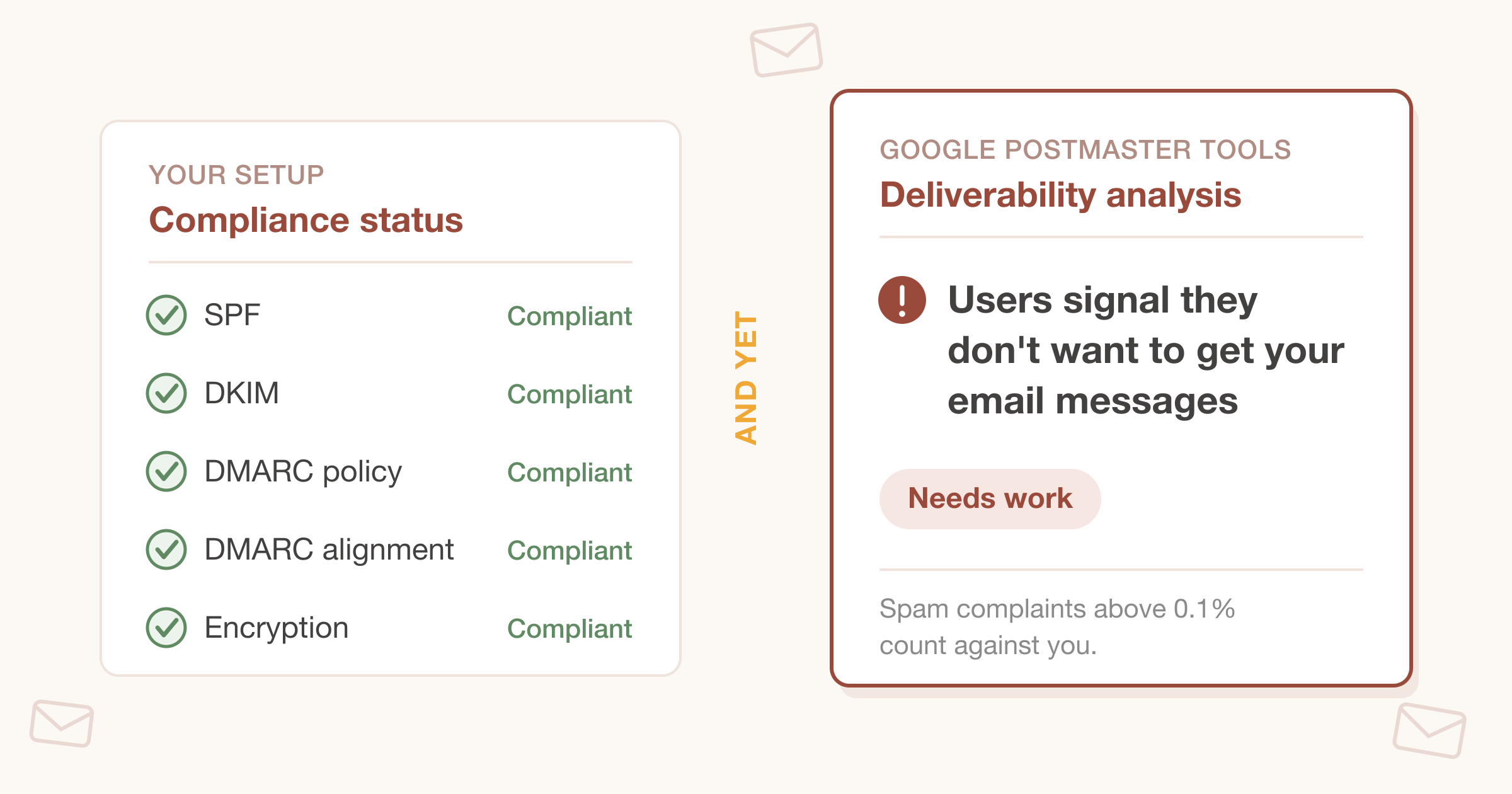
Now it hands you a sentence. One of the sentences it can hand you is that "users signal they do not want to receive email messages."
Google didn't announce this. The people who follow deliverability for a living noticed it turning up and compared notes.
Ticking the technical boxes isn't the same as being wanted
There's a group of settings you're meant to have in place so mail providers can tell your emails genuinely come from you rather than someone forging your name. SPF, DKIM and DMARC, if you've ever had a web person mention them in passing. They matter, and you should have them.
What caught my attention is that you can have every one of them right and still be told your subscribers don't want your email. Those settings confirm you are who you claim to be. They say nothing at all about whether anyone wanted to hear from you.
I went and read Google's own developer documentation rather than take a blog's word for it. The tolerance for spam complaints is 0.1%. One complaint in a thousand.
There's also a check on whether you honour unsubscribes, and one of the ways you can fail it is by sending too many campaigns to the same list. Google is now treating over-mailing as a fault, in writing, in its own documentation.
About half your list is on Gmail
Worth knowing how much Google's opinion actually counts for.
We went through four New Zealand newsletter lists we send for clients and counted the addresses. Gmail made up between 38% and 56% of subscribers on every one of them. That's only counting the obvious @gmail.com addresses, so the true figure is higher once you include business addresses quietly running on Google behind the scenes.
When Google forms a view about your newsletter, it's forming it about roughly half the people you're writing to. No other inbox provider is close.
You probably can't see any of this
I'd rather say this next bit plainly than have you go looking and feel misled.
Google only shows the data when enough mail is landing in front of personal Gmail addresses. The working figure among people who watch this closely is somewhere north of a hundred a day, and it's assessed daily. Send once a month and you may get a single day of data with a long silence either side.
Plenty of perfectly healthy newsletters don't send enough to register. Ours included.
So this isn't a post telling you to go and check your score. Most people reading it would find an empty screen. It's worth understanding anyway, because the score exists whether you can see it or not, and the things that damage it are already sitting in the report your email platform hands you after every send.
What to watch instead
Spam complaints. Lowest tolerance of anything on the list, and the fastest way into trouble.
Unsubscribes. The polite version of a complaint. A rising rate is people telling you something before they get annoyed enough to hit spam.
Bounces. Dead addresses piling up reads as a list nobody is looking after.
Clicks. The one number that still requires a human to physically decide to do something, which is why we'd have you watch it instead of opens, for reasons we went into last month.
Gmail on its own. Most email platforms will break your results down by recipient domain, which lets you look at Gmail separately instead of a blended average. If Gmail is sagging while everything else holds steady, that's your signal.
Then the uncomfortable one. If a decent chunk of your list hasn't opened anything in a year, emailing them every month is now costing you something. It used to be free.
Nobody tells you when this goes wrong
I spent an afternoon recently going through the sending setup behind every client list we send. One of them had settings that didn't line up, of the sort that can quietly stop mail reaching people.
Nobody had complained. Nobody was going to. The people not receiving your email are in no position to tell you they didn't receive it. That's what makes this kind of problem expensive. There's no bad month to point at. It shows up as several years of not much happening.
If you'd rather someone else kept an eye on this, that's the part we do. Hit Send is now part of Ark Advance, writing and sending newsletters for people who'd sooner get on with running their business. Happy to take a look at how yours is set up if you want a second pair of eyes on it - drop us a line.
About Hit Send
Hit Send is an Auckland email marketing agency. We write, design and send the monthly newsletters small and medium businesses don’t have time to do themselves. Based in Grey Lynn, working with clients across New Zealand.